

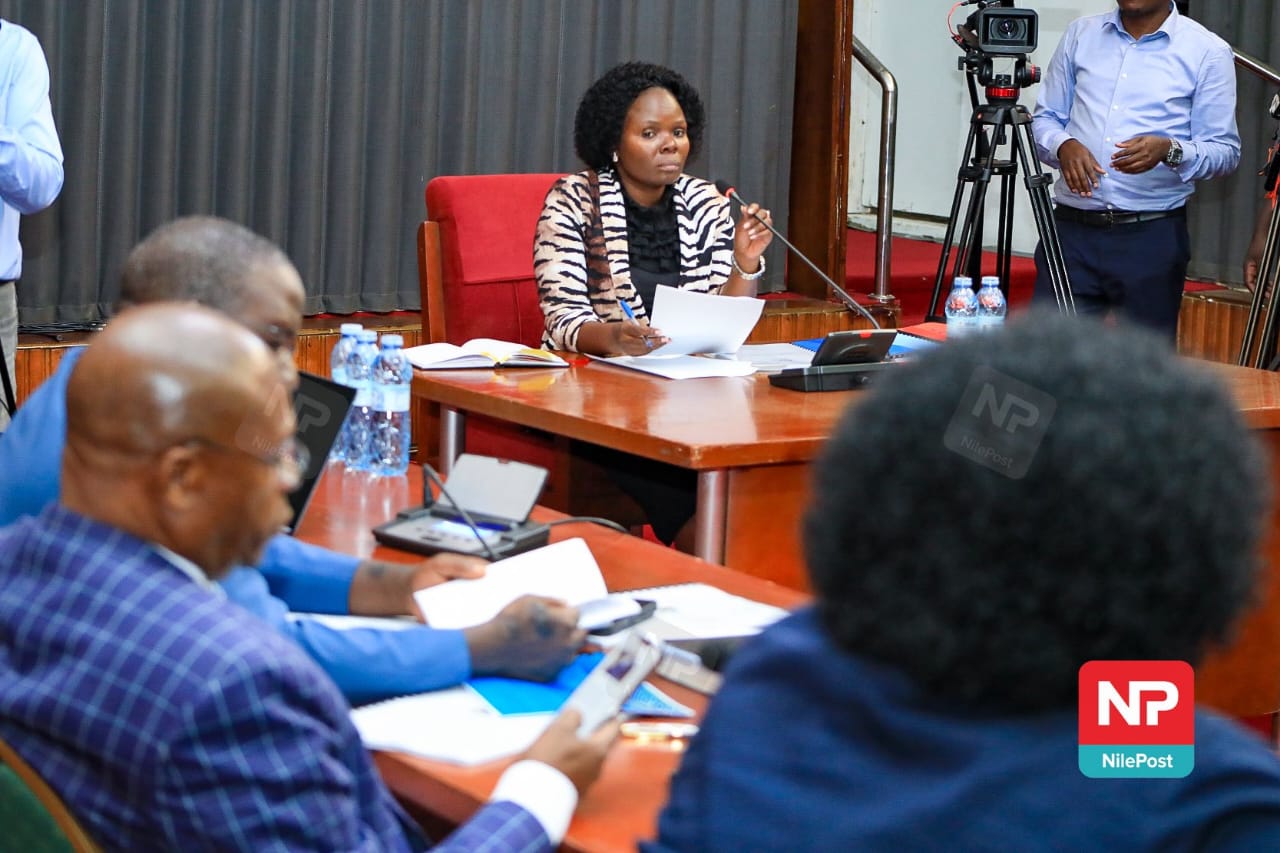
The Ministry of Public Service is expected to appear before Parliament’s Public Accounts Committee (PAC) today at 4pm, as lawmakers continue probing the country’s massive staffing gap across government institutions.
The session will mark the third attempt by the committee to engage the ministry on the issue, following earlier meetings where officials failed to satisfactorily account for the shortfall.
According to Auditor General Edward Akol, Uganda’s public service has a staggering 301,600 vacant positions, representing 46 percent of the approved establishment.
The figures are contained in the Auditor General’s report, which shows that as of December 31, 2024, the total number of approved public service positions stood at 658,104. Of these, only 356,504 had been filled, translating into a staffing level of 54 percent.
The report warns that the large number of unfilled positions is already affecting the delivery of essential government services.
“The 54 percent staffing level means that nearly half of all public service positions remain unoccupied, hence negatively affecting the quality and efficiency of service delivery,” the report states.
The shortages are particularly pronounced in critical sectors such as education, health, and security, where personnel are essential for day-to-day operations.
Local governments are among the most affected. Data from the report shows that only 42,450 out of 74,058 approved positions in local government structures have been filled.
Security agencies are also grappling with significant staffing gaps. The Uganda Prisons Service, for instance, has filled only 13,810 positions out of an approved establishment of 26,387.
Officials from the Ministry of Public Service attribute the staffing gap to several factors, including wage bill constraints, delays in recruitment processes, and a government freeze on hiring.
Victor Bua, the Assistant Commissioner for Compensation at the ministry, said the government must first review the list of unfilled positions and determine priorities before undertaking large-scale recruitment.
“We need to analyze the schedule of unfilled positions,” Bua said. “There are a lot of demands on the government’s treasury, and you also have some demoralized staff.”
Members of the Public Accounts Committee are expected to question ministry officials on why the vacancies have persisted for years and what concrete measures are being taken to address the human resource crisis.
Lawmakers are also likely to examine the impact of the staffing deficit on service delivery and explore possible policy and budgetary interventions to enable government institutions to recruit more personnel.
